
How to Search Civil Dockets
Major civil actions, divorce, property disputes, and appeals from limited courts belong in Lanier County Superior Court. Search those through PeachCourt, which requires an account. Magistrate Court generally handles claims under $15,000, plus dispossessory, garnishment, foreclosure, abandoned-property, abandoned-vehicle, interrogatory, and mechanic's-lien categories. Its public search is Georgia Magistrate Records.
No official Lanier source publishes a Superior civil case-number format. Copy a number exactly from a notice or filing instead of adding a guessed prefix. If only a party name is known, use a date range and file type to reduce false matches.
- Determine Superior or Magistrate jurisdiction from the filing or claim.
- Open the correct official portal and select Lanier County.
- Search by exact case number, or combine name, file type, and dates.
- Match parties and filing date, then read events in order.
- Request the actual document or certified judgment from its clerk.
Lanier's $15,000 Civil Line
The clearest Lanier County civil docket routing fact is the Magistrate Court threshold. Claims generally under $15,000 start there. Larger matters and cases within the broad authority of Superior Court use the Superior docket. The amount is not the only issue, since case type also controls jurisdiction, but it prevents a common portal mistake.
| Record path | Typical Lanier matters | Public starting point |
|---|---|---|
| Superior | Major civil, divorce, property, appeals | PeachCourt |
| Magistrate | Claims under $15,000, dispossessory, garnishment | Georgia Magistrate Records |
Municipal courts do not keep Lanier's general civil docket. They focus on city traffic and ordinance cases.
What a Civil Docket Shows
Read a Lanier County civil docket as a timeline. A complaint or Statement of Claim starts the file. Service entries show efforts to notify the opposing party. An answer, motions, notices, settings, orders, judgment, and post-judgment steps can follow. A docket line only reports an event. The actual pleading or order may require a separate image purchase or clerk request.
| Case Number | The court identifier; no official local format has been published. |
|---|---|
| Parties | Plaintiff or petitioner and defendant or respondent. |
| Filings | Complaint, service, answer, motions, notices, and orders. |
| Settings | Calendar call, hearing, trial, reset, or continuance dates. |
| Outcome | Dismissal, judgment, satisfaction, or appeal entries. |
A default notation is not always the final judgment. A payment receipt is not the same as a satisfaction entered on the docket. Those distinctions matter when tracking the true status of a Lanier County civil case.
Lanier Magistrate Search Fields
The Magistrate portal exposes a useful set of fields that also maps the local docket. Select Lanier County, then combine only the details that are known. Broad date windows can help when spelling varies, while file type can distinguish a claim from a dispossessory or garnishment.
| Field | Type | Use |
|---|---|---|
| County | Dropdown | Select LANIER |
| Last / First Name | Text | Party search |
| File Type | Dropdown | Claim, dispossessory, garnishment, foreclosure, abandoned property or vehicle, interrogatories, mechanic's lien |
| Case Number | Text | Exact known identifier |
| Dates | From / To | File, judgment, or disposition range |
The official civil search screen shows those fields and controls.
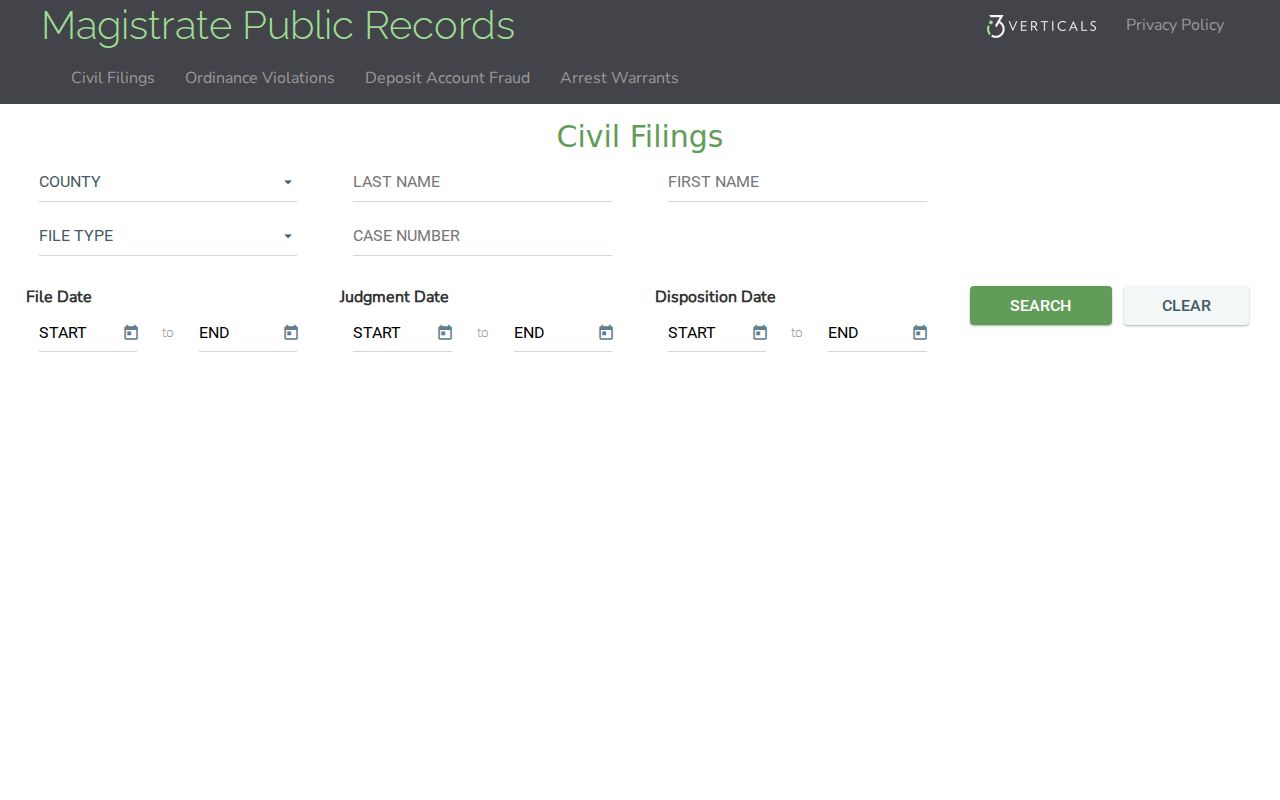
No safe sample result was opened during research, so result columns and detail fields should not be inferred.
Types of Civil Cases on the Docket
Lanier County civil dockets reflect the court split. Superior Court covers major civil actions, family matters where public, property and contract disputes within its authority, and review from limited courts. Magistrate Court uses specific filing categories that are visible in its search.
- Statements of claim and other limited civil disputes
- Dispossessory and garnishment filings
- Foreclosure and mechanic's-lien categories
- Abandoned property and abandoned vehicle cases
- Interrogatories and post-judgment proceedings
Search terms should follow the filed category. A post-judgment garnishment may be tied to an earlier judgment, and an interrogatory may stay under the original number or receive a new number based on timing.
Lanier's Civil Answer Timeline
The county's civil judgment and post-judgment handout says an answer is due within 30 days. It also describes an additional 15-day route to open default by filing an answer and paying costs, subject to the stated conditions. These periods explain why a Lanier County civil docket may show a default-related entry before a final judgment.
Read the sequence: filing, service, answer deadline, default activity, and judgment are separate events. Check the filed order for the court's decision.
The handout distinguishes liquidated from unliquidated damages and dismissal with prejudice from dismissal without prejudice. Those phrases affect the case, but the current order controls. Do not rely on a portal label alone.
Settings and Hearings on Civil Dockets
The Alapaha Judicial Circuit publishes Lanier Civil, Civil CC, and Civil Trials calendars. CC means calendar call, a scheduling and case-call block rather than proof of a completed trial. The public monthly schedule can show a county, date, time, and setting label without naming an individual case.
Confirm a setting in the Lanier County civil docket and in the latest court notice. A reset or continuance can replace an earlier date. For Superior scheduling questions, the circuit directory lists the Lanier judicial-assistant office at 229-363-2944 and the administrator at 229-686-6177. The Lanier County court calendar explains the full confirmation chain.
Magistrate Court publishes a third-Thursday schedule for some matters, but that court-wide rhythm does not prove that a specific civil case is set. Call Magistrate Court at 229-482-2207 when the public search and notice do not agree.
Lanier Civil Filing Portals
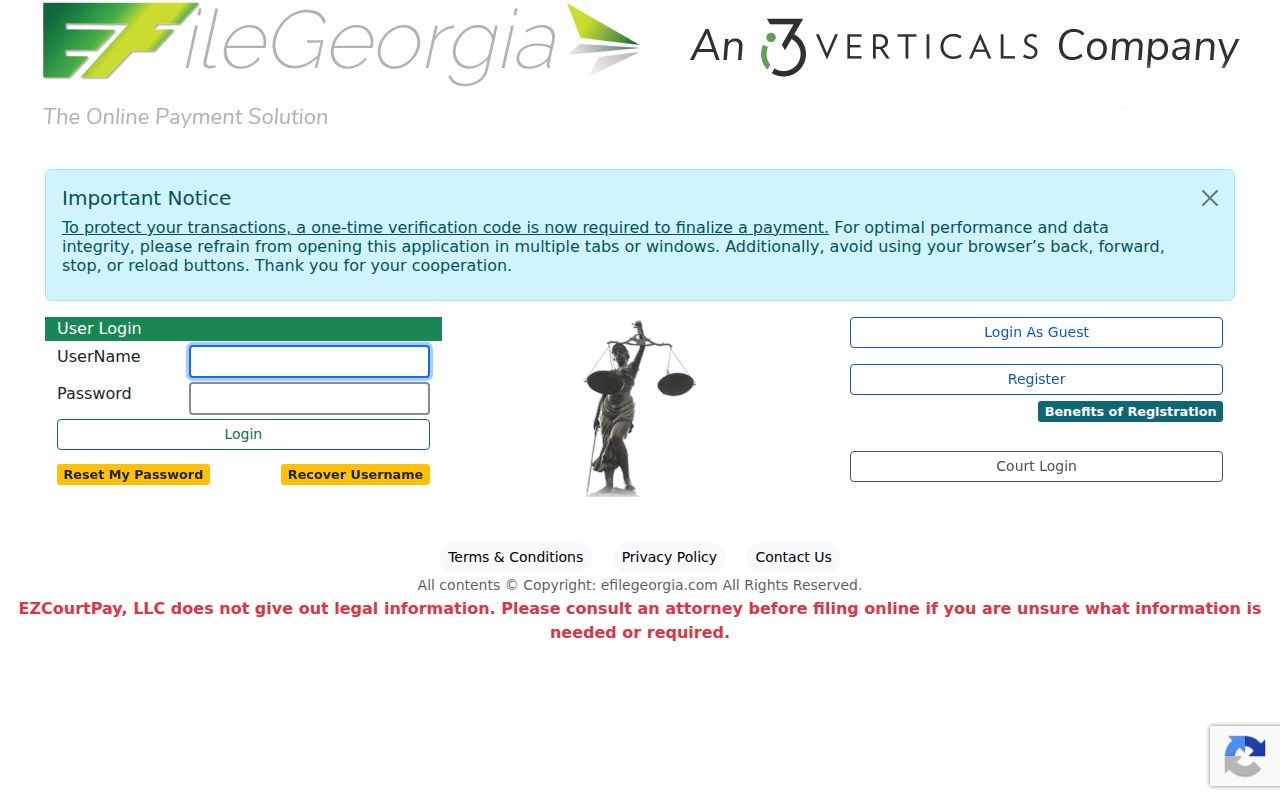
E-filing and public docket access are different tasks. Lanier links eFileGeorgia as a filing account for Magistrate matters. Its login requests a username and password and warns users about payment verification. It does not replace a public civil docket search.
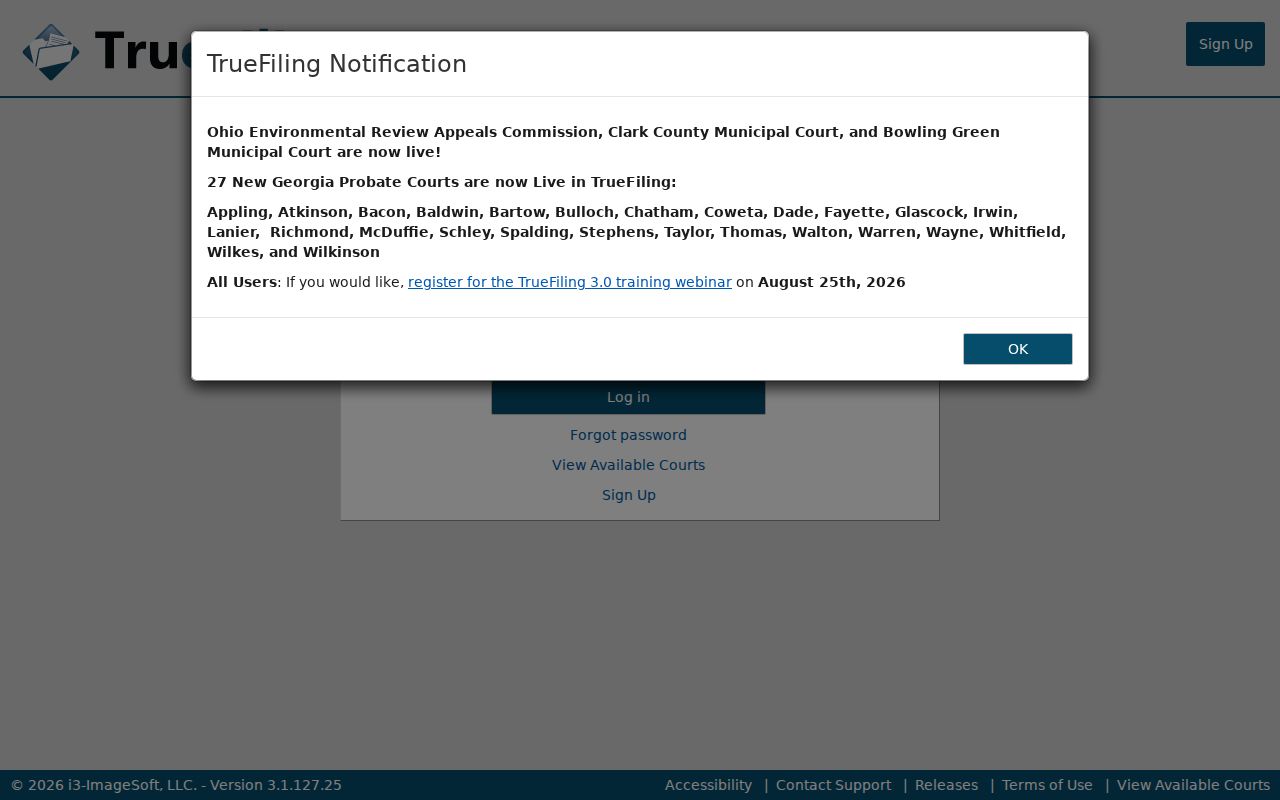
Probate and Magistrate pages also link TruFiling, whose initial screen requests email and password or offers signup.
A filing receipt proves submission through that service. It does not by itself prove that the clerk accepted the filing or that a hearing was set. Check the Lanier County civil docket for the filed entry and any later order.
Lanier Post-Judgment Docket Entries
A judgment may lead to a Fi Fa, garnishment, continuing garnishment, interrogatories, or satisfaction entry. A Fi Fa is Georgia's execution record used after judgment. The local handout says a contested judgment should wait ten days before issuance and that the clerk records it on the General Execution Docket.
The handout lists garnishment and continuing garnishment at $106 in its context, with continuing garnishment lasting 180 days. It describes interrogatories at $10 within 30 days under the original case number and a new case number with a $106 charge after that point. A newer fee schedule lists a $29 Fi Fa total including Superior recording, while the older handout says $7. Because the sources differ by date or transaction context, confirm the current amount with the Magistrate clerk.
A paid judgment still needs a satisfaction entry. The local instructions cite OCGA §9-13-80 and state that the creditor must direct cancellation or satisfaction within 60 days. Look for that final docket act instead of assuming that payment closed the public record.
Public Access to Civil Dockets
Lanier County civil dockets are generally public, subject to Georgia law, court rules, sealing orders, and redaction. Family, juvenile, adoption, medical, and protected-identifier material can have tighter limits. Uniform Superior Court Rule 21 states the public-access principle and governs orders that limit access. A missing online image can also reflect a provider exclusion or fee rather than a seal.
Access rules: Uniform Superior Court Rule 21 addresses court-record access and restriction orders. The Georgia Attorney General's Open Records Act FAQ explains response, copying, and redaction principles.
Use all available channels. Superior records can be searched through PeachCourt, then requested from Clerk Patricia L. Bass at 56 W. Main Street, Suite 5, Lakeland, Georgia 31635, phone 229-482-3594. Magistrate users may search online, call 229-482-2207, visit Suite 10, or submit the written records form. That form estimates about three to five business days, limits each submission to one case, and warns that copy, certification, or extensive-research charges may apply. No Lanier source confirms a free public terminal or a Superior email request route.